
CSUD

Nairobi Regional Project (VREF Center of Excellence/Rockefeller Foundation)

Introduction Motivation & Methodology Multi-Leveled Approach Scaling Up/The Future


Nairobi/Ruiru Research and Education Pilot Site

Founded in 2004, CSUD is one of seven global Centers of Excellence (CoE) in Future Urban Transport established by the Volvo Research and Educational Foundations (VREF). VREF is currently the primary sponsor of our pilot research and educational effort in the Nairobi Metropolitan Area in the East African country of Kenya and CSUD has recently been awarded additional funding by the Rockefeller Foundation to continue, expand and deepen those efforts. Work on this project is conducted in the capital city of Nairobi and in the satellite municipality of Ruiru.

As a VREF CoE and an academic center, research and education are the tools we bring to the task of creating effective processes for metropolitan land use and transport planning. Our work is directed towards the establishment of integrated and community-based metropolitan planning; planning that will result in the creation of sustainable and equitable urban development. We work in close collaboration with local academic partners to ensure that the tools of research and education are both available and accessible to community members, enabling them to effectively address the challenges of rapid urbanization facing their communities. We seek to bring together local communities with faculty and students from Kenya, the United States and other parts of the world to collaboratively meet these challenges. Through this research and educational focus, we facilitate crucial engagement with government, private industry, NGOs and other groups of importance to local and regional planning efforts. 


Introduction Motivation & Methodology Multi-Leveled Approach Scaling Up/The Future


Engaging Complexity: How does innovation go to scale?

The broader motivation for CSUD’s work in the Nairobi area is rooted in our commitment to attaining the Millennium Development Goals (MDGs) in the cities of Sub-Saharan Africa. Over half of the world’s population now lives in urban areas, and this percentage is steadily increasing—the fastest growing population group being the urban poor. This shift is particularly pronounced in Sub-Saharan Africa. If the MDGs are to be attained worldwide, it is crucial that they be attained in Sub-Saharan Africa. What is clear is that the primary obstacle to reaching the MDGs is not one of ignorance about the solutions as much as it is one of creating viable approaches to institutionalizing these solutions at an adequate scale and within the context of planning for the urbanization that is overtaking that region.

Our work is intended as a demonstration of how such institutionalization can be accomplished on the ground and scaled up through participatory planning and through the active creation of policy networks. A policy network is a group of stakeholders, all of whom have an interest in a given policy sector and the capacity to help determine policy outcomes. Key to these efforts is the development of a highly localized understanding of context and the process of public intervention in the form of planning. In conjunction with this understanding, it is critical to consider the larger structural (i.e. social, economic and political) drivers that define the constraints and opportunities of a rapidly urbanizing environment. CSUD’s two-fold approach of contextual knowledge and structural knowledge, centered on the active creation of policy networks, allows us to begin the process of parsing the “generic” from the “specific.” Such parsing is necessary for gaining transferable knowledge about innovative approaches from our site-specific efforts that have wider global applicability.

While urbanization brings with it great social and environmental challenges, it is important to bear in mind that urbanization is, and has always been, the necessary condition for high and sustainable rates of economic progress. If we do not meet the challenges of rapid urbanization, we will fail in our efforts to achieve the MDGs.


Methodology

As a university-based center, our focus is primarily on interdisciplinary, process-oriented research and education, but we also believe that universities have a crucial role to play in working cooperatively with local communities, both to foster local educational opportunities as well as to provide tools that encourage local applied efforts. Therefore we employ a policy network approach that allows us to have a wider and more sustainable impact. At the core of CSUD’s approach to its work in the Nairobi area, is our Center’s partnership with the University of Nairobi’s Department of Urban and Regional Planning (DURP). In addition, our Center has established a partnership with the Kenya Institute for Public Policy Research and Analysis (KIPPRA). In conjunction with these central partnerships, we also develop working relationships with a variety of specific organizations and individuals on the ground. Our approach is interdisciplinary in that we advance explicit incorporation of cultural, political-economic, public health and environmental knowledge in the planning process; this requires engagement with a diverse community of individuals, including urban planners and designers, engineers, economists, political scientists, and public health researchers and professionals. In these ways CSUD is part of local efforts geared towards capacity building, increasing access to information and knowledge sharing opportunities, and facilitating the establishment of an urban policy that reflects the Kenyan urban environment and thus can ultimately be sustained by a Kenyan network.


Introduction Motivation & Methodology Multi-Leveled Approach Scaling Up/The Future


Our work in the Nairobi metropolitan area operates on multiple levels and scales:

Small-area approach with Ruiru Municipality

By working on a pilot urban planning project based in Ruiru, a municipality located roughly 16 kilometers outside of Nairobi, we have been able to demonstrate the value of our approach to increasing local planning capacity. In turn, this influences planning for the wider Nairobi metropolitan area. The work in Ruiru is effectively a model for participatory urban planning in Kenya, contributing to improved understanding of commonalities in the social, political, and geographical contexts of rapidly urbanizing cities in Africa and in other areas of the Global South.

CSUD and DURP have been working with the Ruiru Municipal Council as well as the members of the Ruiru community in order to understand and better plan for the impacts of rapid urbanization that are occurring in the municipality. Through joint international and interdisciplinary academic studios and community meetings and workshops that enabled a participatory planning process, CSUD and its partners worked directly with the Ruiru municipality using a multi-sector planning approach to create the Ruiru Local Physical Development Plan: 2005-2020. The Ruiru Municipal Council submitted its plan to the Ministry of Lands in 2007, which was approved and is now in its final stages of authorization. The development plan considered both the Nairobi Metropolitan Area as well as the Ruiru Municipality. Through collaborative efforts with our partners, we were able to assist Ruiru in developing a municipal plan that highlighted Ruiru’s own municipal identity, while at the same time, positioning Ruiru to partner with Nairobi and other municipalities in order to promote a metropolitan plan, encompassing the needs of the entire Nairobi region. Consultation with stakeholders, academic research done by University of Nairobi and Columbia University, and continuous community participation in the process was the foundation of this Ruiru Local Physical Development Plan: 2005-2020. You can read more about CSUD and DURP's approach here. The process and resulting plan are ultimately important steps towards using the multi-sector planning process for the Nairobi Metropolitan Area. Fostering policy changes that facilitate the creation of comprehensive planning strategies is critical to the wider goal of developing a comprehensive transportation system for the entire Nairobi Metropolitan Area.


Selected Efforts at the Metropolitan scale

In conjunction with our work in Ruiru, CSUD has engaged in other related projects in the Nairobi Metropolitan Area that demonstrate the importance and connection of metropolitan planning and transport planning:


Analysis of Transport Modal Choice Patterns of Nairobi Residents: Implications for Metropolitan Planning

An important component of CSUD’s work in metropolitan planning capacity building is the creation of a metropolitan land use/transportation model. As of now, Nairobi lacks an integrated land use and transportation plan, a key factor contributing to the transit system’s dilapidated state. Transport-related decisions should take into consideration past and present land use trends and patterns. To begin this process, CSUD believes it is important to understand and to model the dynamics of the current transport situation in Nairobi, including both private vehicles and public transit. A better understanding of the current transport system and land use patterns will allow for recommendations that support a transport system that reflects the generic foundations of a sustainable public transport system as well as the more specific needs of the Nairobi Metropolitan Area.

In 2006, CSUD, the Kenya Institute for Public Policy and Analysis (KIPPRA) and the VREF CoE at UC Berkeley established a partnership to investigate and address the current transport system in Nairobi. Work began with compiling necessary data and information for a detailed traffic model for Nairobi. With this traffic model, we are better able to understand current on-the-ground traffic behavior and characteristics, which can allow for the assessment of three different kinds of short-term strategies aimed at improving the transportation system in Nairobi. These are:

•    Strategies that improve the vehicle-carrying capacity of the existing road and street system;
•    Strategies that improve the passenger-carrying capacity of the existing system;
•    Strategies that focus on demand management opportunities for the existing system

Understanding the current issues surrounding traffic and congestion in Nairobi is an integral first step to the subsequent creation of a Nairobi metropolitan transit system. The transport model will provide an analytical and descriptive narrative of the relationship between travel patterns and land use in Nairobi, based primarily on Nairobi residents, neighborhood location and their choice of transport modes. The transport model will both supplement the traffic model and broaden the parameters of analysis, empowering Nairobi’s decision makers to better understand the greater implications of the current urbanization trend in Nairobi and how this trend impacts the transportation system. The traffic and transport models when taken together will help highlight transport policies and investments that will ultimately better align transport supply with demand.


Study of the Role of the Matatu Industry in the Future of Nairobi Transport

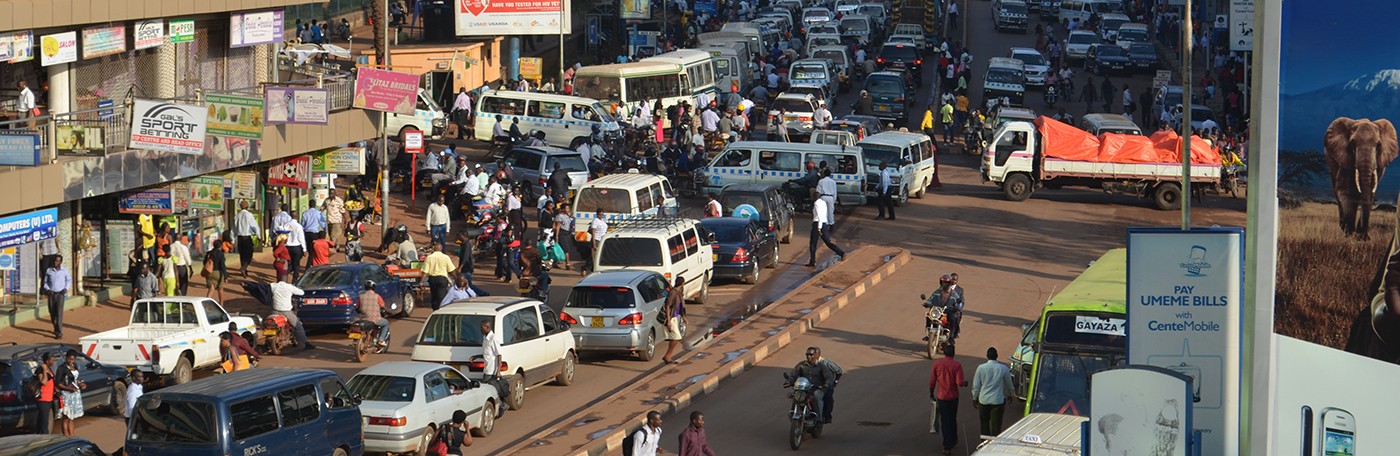
Matatus are privately operated buses of varying size and capacity. They are the primary mode of motorized public transportation in Kenya. As an informal paratransit industry in Kenya, matatus provide service to millions of people a day, comprising the backbone of the transportation system in Nairobi. While providing employment opportunities for Kenyans on various levels, the matatu industry is also seen by many as one of the biggest obstacles to the creation of a public transportation system. The “quick” solution by government officials has been to attempt to abolish the matatu altogether. This study provides an analysis of the matatu industry’s operations and discusses how its structure and networks pose both obstacles and opportunities for transport reform in Nairobi, Kenya. By facilitating a broader policy dialogue involving key stakeholders from both the wider transportation industry as well as the matatu industry specifically (the latter having historically been excluded from many such dialogues) in the reform process, this study shows that matatus can play an important role in the creation of a more comprehensive transit system that would service not only Nairobi, but its satellite cities as well.

Read the working paper here.


Nairobi Area Traffic Contribution to Air Pollution Study

The air pollution problems that plague Nairobi are largely related to the city’s transport system. The combination of poor infrastructure and road maintenance with older and unregulated vehicles is a source for high levels of toxic particulate matter and green house gases that are polluting the entire metropolitan area. Given local urban public health concerns and wider climate change concerns, CSUD is launching a study built upon a 2006 air quality pilot study that will further collect, measure and analyze toxins emitted from vehicles. The study will seek to better understand the impact of these toxins from both a public health and a spatial perspective. This dual angle allows for recommendations that can improve vehicular standards which will directly improve public health as well as help policymakers better understand and conceptualize the spatial connection between urbanization and transport. This can help transport planners and policymakers identify ways forward in the planning and designing of a road network that supports a comprehensive transit system in a sustainable and environmentally friendly manner that also supports the local community.


Mapping Data and Sharing Knowledge/Information

Mapping is a powerful tool for providing people with an improved and shared understanding of the spatial and related social issues they are confronted with. With the assistance of the Spatial Information Design Laboratory (SIDL) at the Graduate School of Architecture, Planning and Preservation at Columbia University (GSAPP), CSUD has completed GIS maps of the Nairobi core with detailed overlays of land-use, building density and road/footpath networks. CSUD is working to make its GIS base map and overlays of Nairobi available for public use. By merely registering, users will have free of charge access to this data in a highly accessible form. This information is valuable in better understanding how the planning process is proceeding in Nairobi in terms of both stakeholders and decision making processes; however as development is an ongoing process, the Center will work with the University of Nairobi planning students to maintain accurate GIS map data on the ground. CSUD is exploring methods to build upon the GIS maps mentioned above, focusing on incorporating further research from other organizations into a large series of data overlays within the Nairobi metropolitan area as well as extending current data overlays along Thika Road, the major corridor connecting Nairobi to Ruiru, our main project site.


Introduction Motivation & Methodology Multi-Leveled Approach Scaling Up/The Future


The creation and initial approval of the local physical development plan for the municipality of Ruiru is a nod to the acceptance and value of the participatory planning process. DURP is now in the process of explaining the work undertaken in Ruiru to the municipality of Mavoko, another satellite city of Nairobi. The hope is that the participatory planning process can be replicated in the other municipalities and eventually in other regions of Kenya. Through networking and knowledge sharing, more local development plans can be drafted and implemented through participatory planning processes. Fostering improved relationships between these satellite cities and Nairobi City is also an important element when considering the future development of the entire region–particularly with factoring in ways forward for a metropolitan public transportation system and other major infrastructure projects.

CSUD and partners are also working on several overlapping fronts to identify successful components to our approach, disseminate lessons learned, and what we term “best principles” for urban planning in related contexts.


Knowledge Dissemination

We disseminate our findings largely through publications, international conferences, academic workshops, lectures, courses and our website. We also work with our partners in Kenya to disseminate information more widely to residents of the communities in which we work as well as to academic centers, community groups, NGOs and interested and/or relevant actors. To accomplish this, we engage the policy networks that are so crucial to our work in the dissemination of findings through public forums such as public presentations of the local plan, workshops on metropolitan planning and stakeholders meetings. Ultimately, we believe that our findings can lead to policy recommendations for other communities and local and central governments in the Global South.


International Conference: New Frontiers of Urban and Transport Planning

In the fall of 2010, we will be hosting an international conference, which will be held in Nairobi and will focus on New Frontiers of Urban and Transport Planning. This will be another important step in the dissemination of CSUD’s work. One of the highlights of this international conference will be the presentation of the Ruiru Plan’s participatory planning process and its relevance for other cities in Africa and the Global South. The conference will include a forum for sharing experiences of those involved in the various Nairobi projects, addressing the question of scaling-up smaller projects, and the creation of publications and recommendations for moving forward. CSUD envisions a broad range of participants including the Center’s main partner DURP, Ruiru community representatives, members of the Ruiru Municipal Council, representatives from KIPPRA and the University of Nairobi, as well as key community organizations. As part of an effort to foster wider dialogue and knowledge sharing on regional, national and international levels, we also expect to invite representatives from VREF, other VREF Centers of Excellence, key Kenyan and African stakeholders, United Nations and other development agencies, non-governmental organizations, and select private foundations.


University and Community Exchanges

Through our research and education efforts, our engagement with policy networks and our publications, we ultimately promote exchanges between universities and communities in Southern Africa and the wider “Global South” as well as North-South and South-North exchange. An example of this South-South exchange is the SIPA-University of Nairobi Workshop in Cape Town, South Africa, which studied solid waste management and recycling practices to assess the possibility of transferring such practices to Ruiru. The exchanges themselves form the constantly evolving policy networks that provide the channels for relaying information between different projects and regions, thereby increasing the ability for practitioners to learn from each others’ achievements, setbacks and experiences. Such an interactive and open process can present further opportunities for joint work and publication in the Global South that could also ultimately influence the production of knowledge and the evolution of policy in the Global North and worldwide.


Lessons Learned

Our work demonstrates how planning that fosters greater equality and access to the opportunities presented by cities can be institutionalized in workable ways. Although the newly forming process of metropolitan planning for Nairobi has many sources, it is partly an outgrowth of our collaborative Nairobi Project. In the long-term, we believe that the networks that are emerging from and around our work are the key to both scaling up our efforts and communicating knowledge of best practices for attaining sustainable urban development on the ground.